10 ANS—MUCEM
Challenges
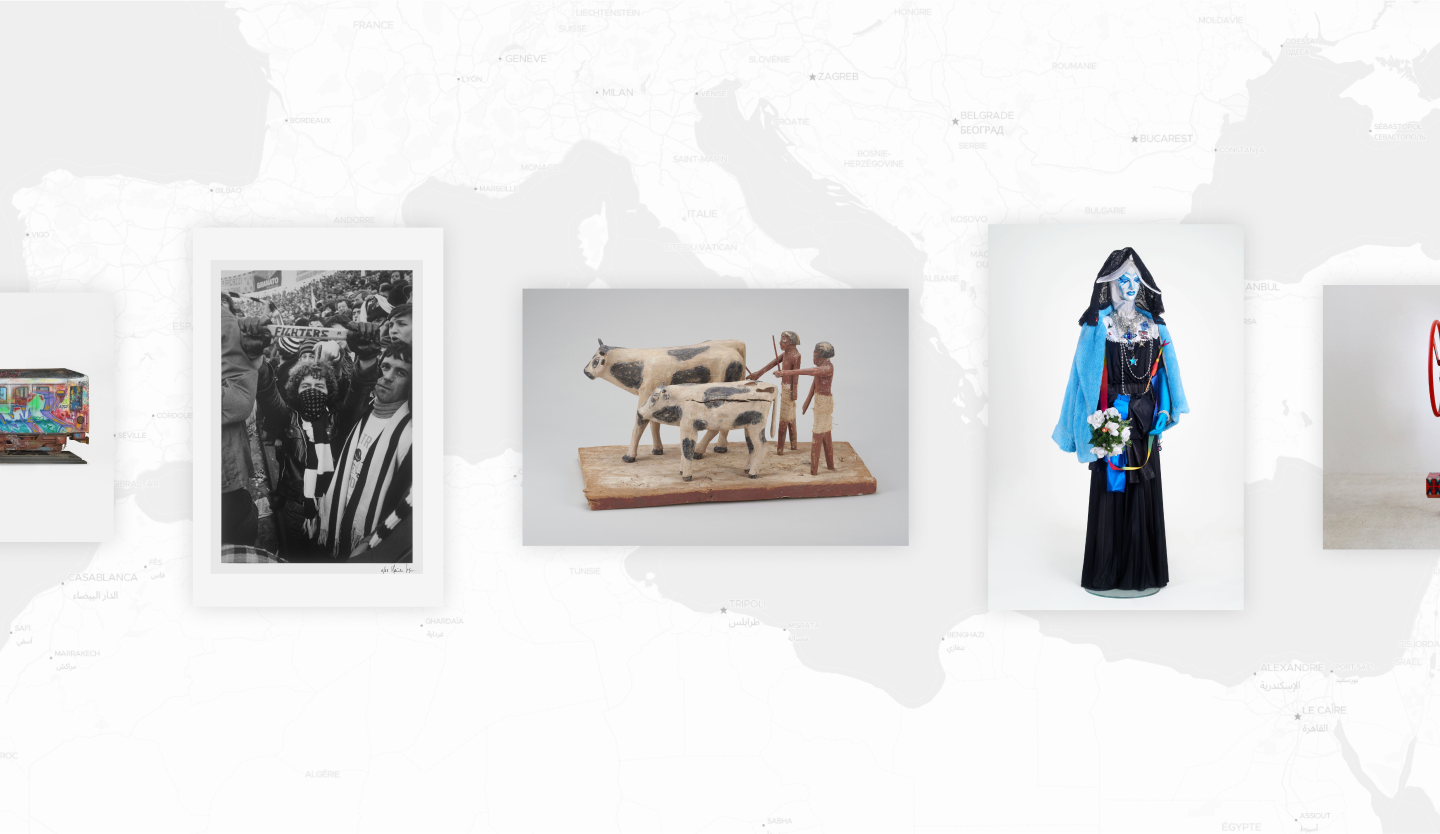
More than a museum, a setting that holds hidden treasures.
Commemorate the 10 years since Marseille was European Capital of Culture (June 2013), drawing on the national and international emblem of the Mucem — known as THE reference museum of Mediterranean civilisations, whose architecture is now etched into the Marseille landscape as a symbol of the city.
Yet we had to go beyond this magnificent setting that the Mucem represents, to focus on the little-known jewels it holds at its heart and underline the importance of its hidden collections — reflecting both the considerable collecting work of its experts and the precious role of donors. The aim was to reconcile simple exploration accessible to every visitor with the scientific rigour that any historical collection also demands.
Dream team
Art Director
UX designer
WebGL Dev
Back-end Dev
Project Manager
Client
Mucem
Solution
An interactive, didactic map — the ideal tool for exploring little-known collection objects, like a true journey through history and space.
This map had to be intuitive for dual use: either a precise-search mode, or a suggestion mode, to reveal iconic or original objects.
The idea is that it be available at the CCR (Collection and Resource Centre) for specialists, and at the end of the Mucem’s permanent exhibition route, for a curious lay public from every background.
Highlights
Simple ergonomics for the user, making it easy to discover objects whether you are a layperson or not ;
Navigation that invites travel, letting you explore lots or continents autonomously.
A powerful search and filter system, to meet the needs of more or less specialist users wanting to reach one of the 6,000 references with precision — each classifiable by 7 criteria (nature, description, author, donor, place, theme, survey-collections).
A “random discovery” option, to offer every visitor that surprise effect that also characterises archaeology and scientific exploration.
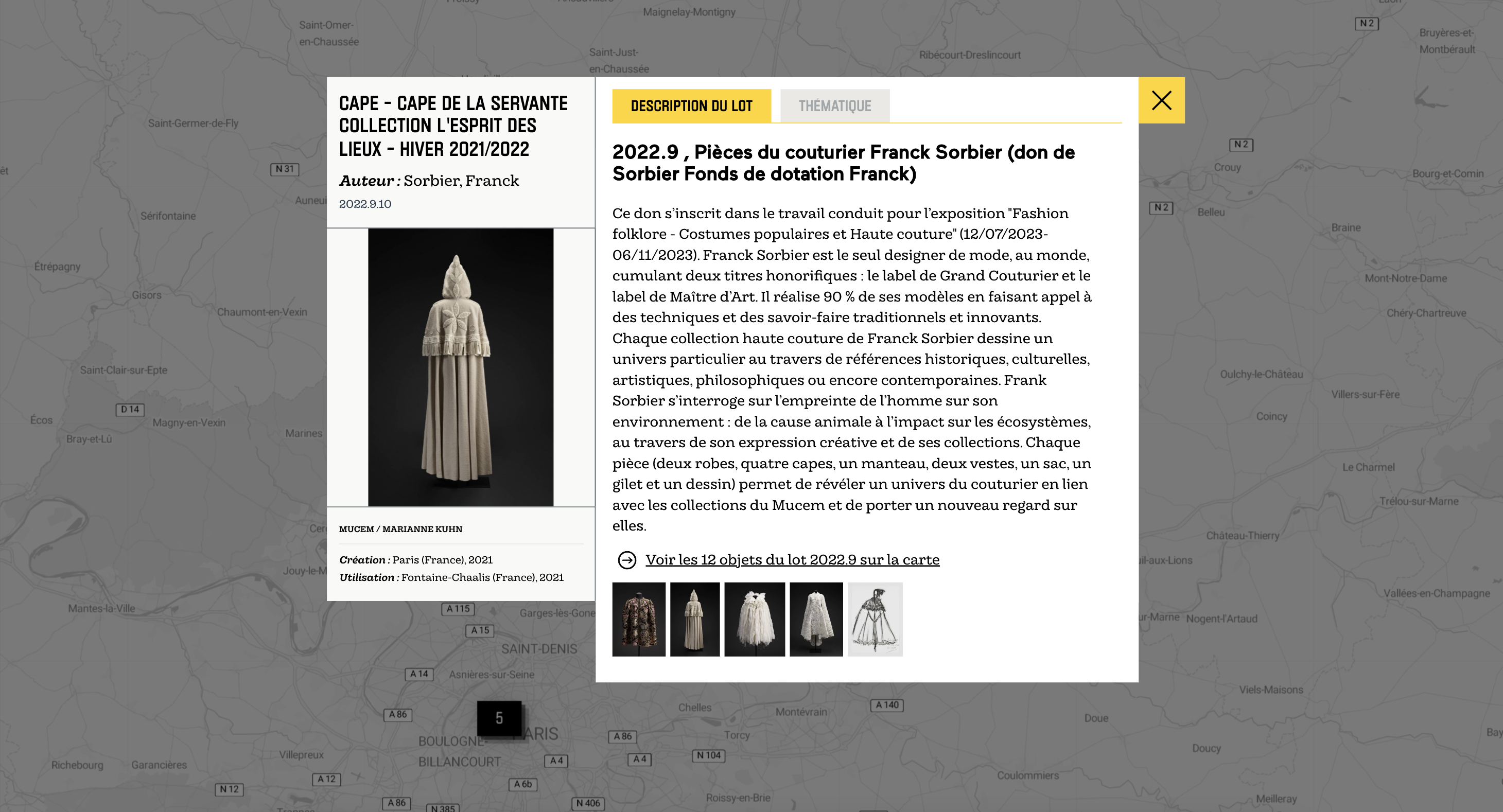
The technical challenge
Extract data from the Heurist software used at the Mucem,
Manipulate, reorganise and optimise a substantial volume of data, to offer an interface where users can choose a filter system by theme (11) or by survey-collection (12) ;
Ensure a responsive interface, suited as much to the touchscreens available in both museums (Mucem and CCR) as to mobile and desktop devices ;
Respect data-intensive constraints.
The full sensory experience
What you see: the geography of the museum’s incredible collection and the variety of subjects addressed by the collections.
What you explore: more than 6,000 objects that retrace our civilisations, with a double journey across continents and their history.
What you feel: the wonder tied to the surprise of discovery ; intellectual curiosity to better understand the nature of this or that object ; the nostalgia and emotion of seeing so many objects that have shaped our civilisations to this day, surviving the weight of history.